


As it approaches its 25th anniversary, the Les Voix Intimes festival feels the need to look back on its history. Not out of nostalgia, but to take a retrospective, analytical, and critical look at a program that has been built, season after season, on a delicate balance between musical rigor, fidelity to the repertoire, and a constant focus on the evolution of artistic practices.
Earlier, we discussed the distribution of different types of repertoires as well as the recurring presence of certain key figures throughout our productions—with Beethoven and Haydn clearly dominating the scene.
If we shift our focus from the composers to the works themselves, a different story emerges: that of the pieces that have left the most lasting mark on our programming.
To tell the truth, the podium is coveted:
🥇 Cinq œuvres ex æquo, avec 5 interprétations :
🥈 Trois œuvres ex æquo, avec 4 interprétations :
🥉 There are far too many contenders for bronze to list them all!
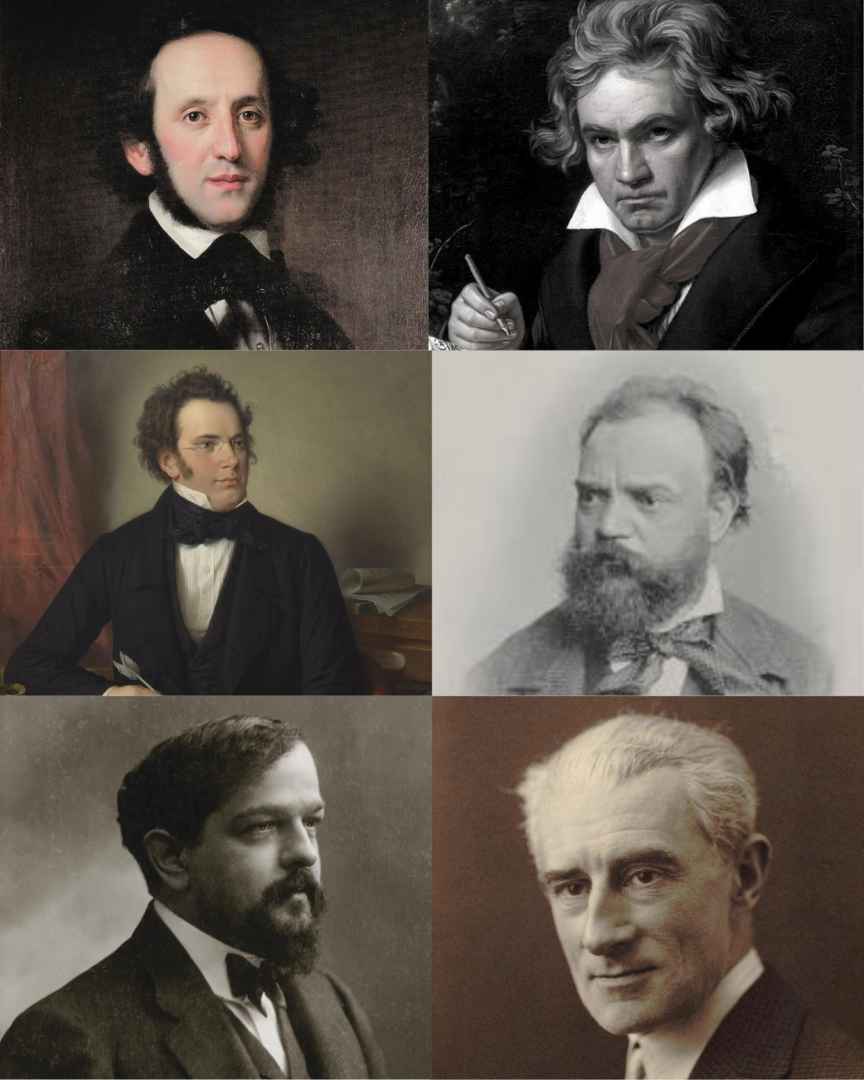
This list reveals a strong classical-romantic core: Beethoven, Schubert, Mendelssohn, Dvořák. It also highlights the omnipresence of the champions of French modernity, with Debussy and Ravel.
Conversely, the absence of Haydn or Bartók "sacred monsters" at the top of the rankings does not mean they are less present, but rather that they are evenly distributed: Haydn and Bartók are played very often, but their works are spread across many opuses, avoiding any concentration on a single emblematic piece.
Read also:
Coming up next: