


As it approaches its 25th anniversary, the Les Voix Intimes festival feels the need to look back on its history. Not out of nostalgia, but to take a retrospective, analytical, and critical look at a program that has been built, season after season, on a delicate balance between musical rigor, fidelity to the repertoire, and a constant focus on the evolution of artistic practices.
Earlier, we discussed the distribution of different types of repertoires, the recurring presence of certain key figures, and the works that have had the most lasting impact on our programming.
As part of this reflection on the festival’s identity, the issue of the representation of female composers stands out as a particularly significant indicator.
Across all 24 seasons of the festival, these performances accounted for just 4.8% of the total —a modest figure that reflects a long-standing structural imbalance in the field of chamber music.
But this overall figure masks a significant shift. Long considered a marginal presence, the number of female composers has seen a marked increase in recent seasons: from the 21st to the 24th edition of *Les Voix Intimes* (i.e., from 2022 to 2026), they accounted for more than 22% of the performances.
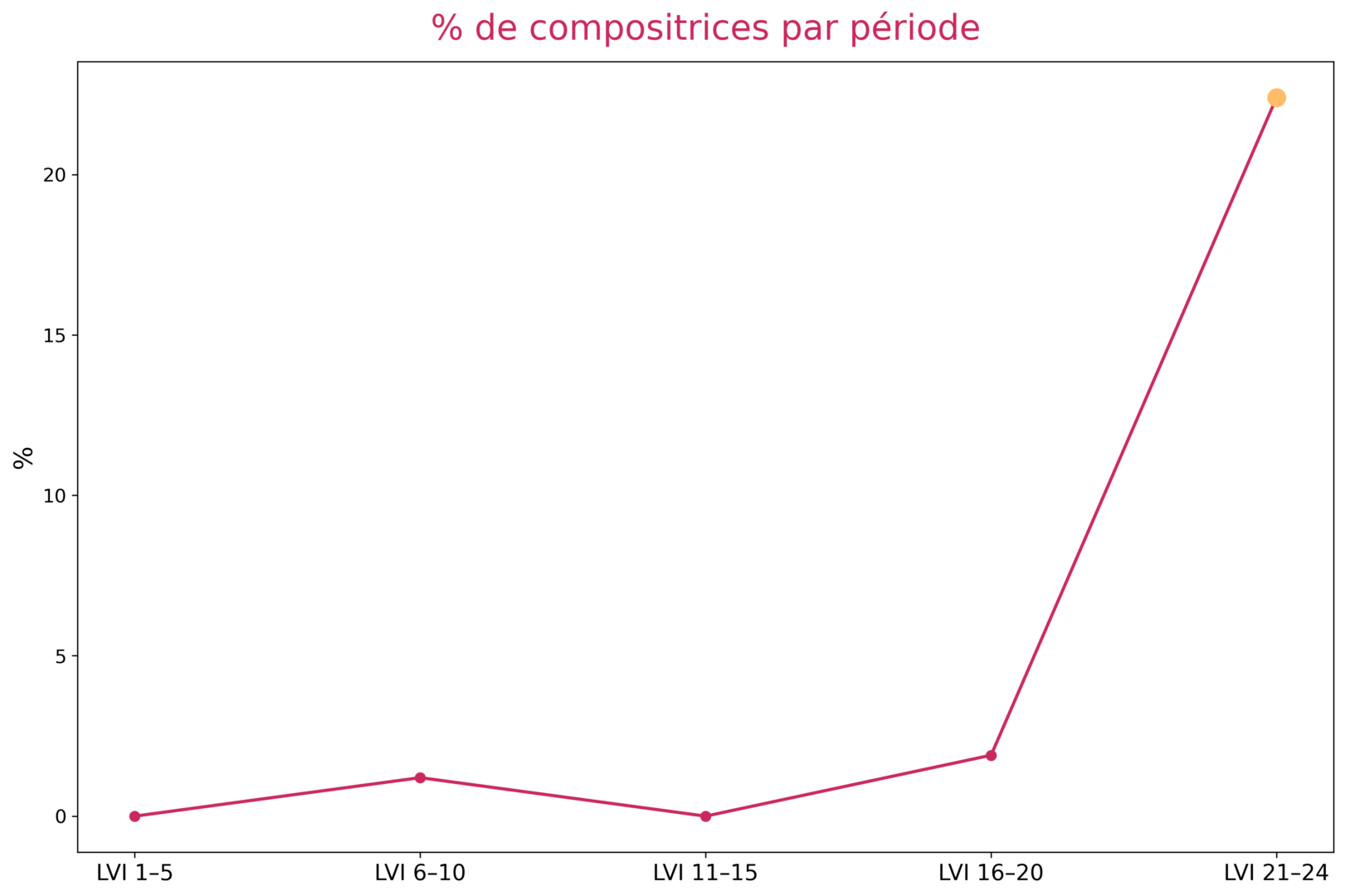
This progress is neither accidental nor superficial. It reflects a growing artistic and societal awareness, as well as a clear commitment to giving a voice to those who have long been marginalized by the mainstream: in 2026, it is about upholding our responsibilities as a cultural institution.
It is also driven by the commitment of certain ensembles and performers, who have actively contributed to this revival by placing these works at the heart of their programs rather than treating them as mere exceptions. Notable examples include the Alfama, Ardeo, Avril, Béla, Karksi, Varèse, and Tchalik Quartets.
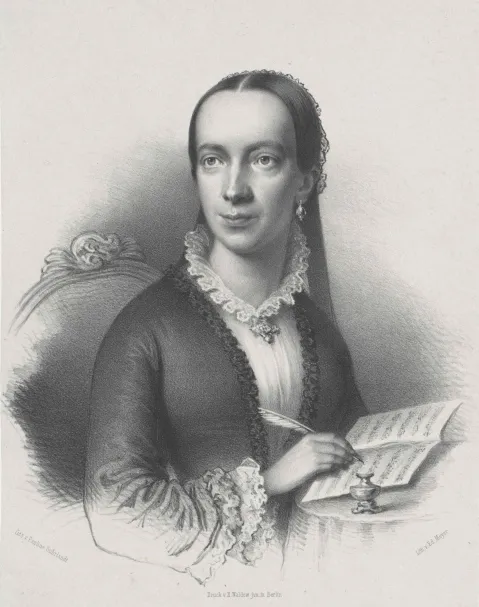
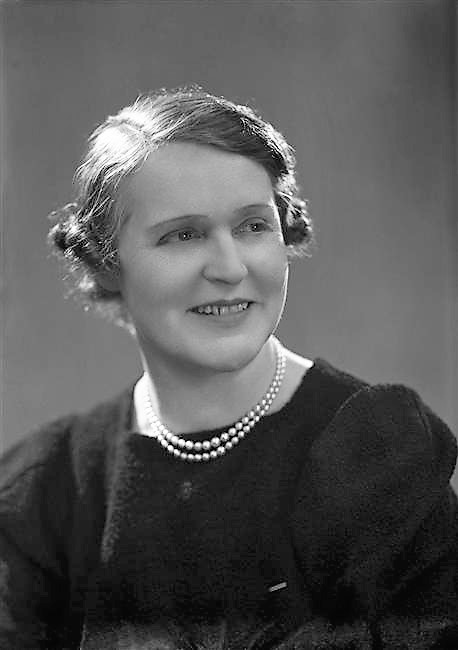
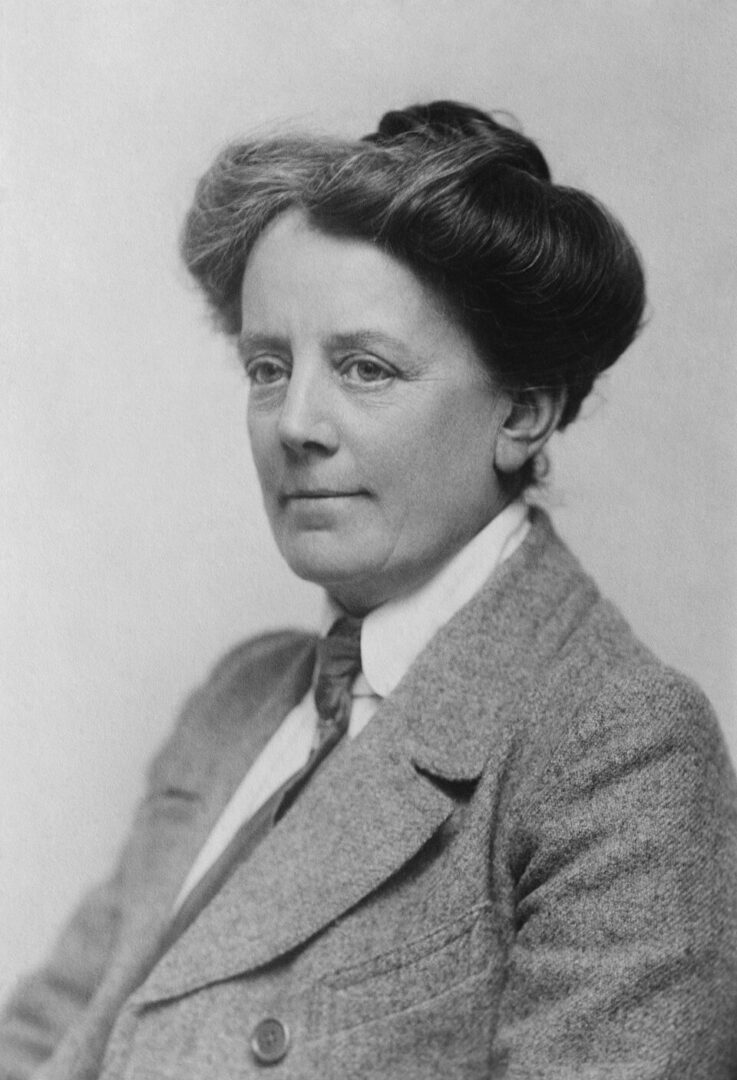
Among the female composers featured in the Voix Intimes program, 19th-century figures such as Fanny Mendelssohn, Maddalena Laura Sirmen, and Emilie Mayer appear alongside 20th-century composers such as Germaine Tailleferre, Rebecca Clarke, Florence Price, and Ethel Smyth. Our programs continue to feature an increasing number of contemporary female composers, including Anna Verunelli, Jessie Montgomery, Grazyna Bacewicz, Caroline Shaw Winkelman, and Silvia Falcinelli.
Read also:
Coming up next: